



Last Updated On February 12, 2026
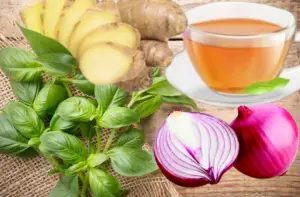
Few things feel as deeply unsettling as the silence of a missing period or the uncertainty of an irregular cycle. When your body’s natural rhythm feels out of sync, it’s easy to feel a sense of disconnection from your own reproductive wellness.
You might be searching for a natural path back to balance. This is where the synergy of Basil Leaf Tea Combo—a potent combination of Basil (Scent Leaf), Ginger, and Onion—offers more than just a traditional remedy; it provides a research-backed toolkit to support hormonal harmony.
By utilizing specific plant compounds that target pelvic circulation and endocrine health, this guide explores how a simple herbal infusion can help you reclaim your flow, nourish your fertility, and restore confidence in your body’s innate wisdom.
Please note that Basil (Ocimum basilicum) is not the same as Curry leaves (Murraya koenigii) which is a different botanical species entirely. For the hormonal benefits mentioned above, ensure you are using the true Basil plant (Ocimum basilicum), which belongs to the mint family (Lamiaceae).
Benefits of Basil Leaf Tea for Fertility and Menstruation
While traditional practices have long utilized Basil, Ginger, and Onion for reproductive health, modern science is beginning to uncover the specific compounds that explain why this combination supports the menstrual health.
1. Hormonal Modulation via Eugenol and Beta-Sitosterol
Basil (Ocimum basilicum) contains high concentrations of Eugenol and Beta-sitosterol. These phytochemicals are known as “plant sterols” that can mimic or modulate estrogen precursors [1, 2].
- The Benefit: For those with scanty or irregular menses, these compounds may help support the hypothalamic-pituitary-ovarian (HPO) axis, which is the control center for your monthly cycle.
2. Prostaglandin Inhibition for Pain Management
The inclusion of Ginger in this tea combo is backed by significant clinical data. Ginger acts as a natural inhibitor of cyclooxygenase (COX), the enzyme responsible for producing pro-inflammatory prostaglandins that cause uterine cramping.
- The Benefit: Research indicates that Ginger is as effective as common over-the-counter NSAIDs (like Ibuprofen) in reducing the severity and duration of menstrual pain (Dysmenorrhea) [2].
3. Pelvic Micro-circulation and Quercetin
Onions are a primary source of Quercetin, a powerful bioflavonoid. Quercetin serves as a vasodilator, meaning it helps relax blood vessels and improve blood flow [3].
- The Benefit: By improving micro-circulation in the pelvic region, this tea combo helps ensure that the uterine lining (endometrium) receives adequate blood flow, which is essential for a healthy, regular period and resolving “scanty” flow.
4. Combating Oxidative Stress in Oocytes
The “miracle” of this combination lies in its antioxidant load. Basil contains Carvacrol and Thymol, which neutralize free radicals that contribute to “Oxidative Stress” [4].
- The Benefit: High levels of oxidative stress can lead to hormonal imbalances and poor egg quality. These antioxidants in Basil Leaf Tea create a protective environment for developing follicles, supporting overall fertility [4].
How to make Basil Leaf Tea: Preparation Guide
The goal of this preparation is to extract the volatile oils (Eugenol) and bioflavonoids (Quercetin) without destroying them through over-boiling.
Ingredients:
- Fresh Basil (Scent Leaf): 1 handful (approx. 20g). Reason: Source of eugenol and beta-sitosterol.
- Fresh Ginger Root: 1 inch, crushed or grated. Reason: Maximizes surface area for gingerol extraction.
- Red Onion: 1/4 of a medium bulb, sliced thin. Reason: Red onions contain the highest concentration of Quercetin.
Practical Steps :
- Preparation: Wash all ingredients in cool water. Slice the onion and grate the ginger to break the plant cell walls, allowing the nutrients to seep into the water.
- The Simmer: Add ingredients to 60cl (approx. 2 cups) of water. Bring to a gentle boil, then immediately reduce heat to a simmer for 10 minutes. Note: Excessive boiling can evaporate the volatile oils found in Basil.
- The Infusion: Turn off the heat and let the tea sit, covered, for an additional 5 minutes. Keeping it covered traps the therapeutic steam.
- Dosage: Sieve and drink one cup while warm.
Precautions and Safety: Clinical Guidelines
In reproductive health, “natural” does not always mean “safe for everyone.” To ensure your safety, please adhere to these research-backed precautions.
1. Dosage and Timing
For Menstrual Regulation: Begin drinking the tea 3 to 5 days before your expected period. This helps stimulate pelvic blood flow to encourage a healthy flow.
During Menstruation: Continue for the first 2 days of your period if you experience cramps. Stop use once the flow is heavy.
2. When to Avoid (Contraindications)
- Pregnancy: Do not consume during pregnancy. Basil contains estragole, and in high doses, it can stimulate uterine contractions, which may pose a risk to the pregnancy.
- Pre-Surgery: Discontinue use at least 2 weeks before any scheduled surgery. Both ginger and onion have mild blood-thinning properties that can interfere with clotting [5].
- Medication Interactions: If you are on anticoagulants (blood thinners) or medication for diabetes, consult your doctor. Ginger may enhance the effects of these drugs, leading to blood sugar drops or bruising.
3. The Fertility Warning
If you are actively undergoing IVF (In-Vitro Fertilization) or taking hormonal medications like Clomid or Letrozole, avoid this Basil Leaf Tea unless cleared by your reproductive endocrinologist. Herbal phytoestrogens can sometimes compete with fertility drugs for receptor sites.
Conclusion: Basil Leaf Tea Combo for Reproductive Health
While traditional wisdom has long praised this herbal combination, the science of reproductive wellness confirms that the synergy between Basil (Scent Leaf), Ginger, and Onion offers a potent, evidence-based approach to cycle regulation. By addressing the root causes of menstrual irregularities—such as poor pelvic circulation, inflammatory pain, and oxidative stress—Basil Leaf Tea combo serves as a natural tool to help you reclaim your body’s rhythm.
Key Takeaway:
- The Objective: To stimulate a healthy uterine lining (endometrium) and resolve scanty or irregular periods.
- The Scientific Mechanism: Phytoestrogens from Basil support hormonal balance, while Quercetin and Gingerols improve blood flow and suppress uterine inflammation.
- Optimal Timing: For best results, integrate this tea into your routine 3–5 days prior to your expected menstruation to prime your reproductive system.
- Safety Reminder: This guide is for educational purposes. Avoid use if you are pregnant, scheduled for surgery, or on blood-thinning medication.
- Botanical Check: Always verify you are using Basil (Ocimum basilicum) and not the unrelated Curry Tree leaf to ensure the safety and efficacy of the phytochemicals.
